

A Financial Services client located in California was scaling quickly. As they scaled, it quickly became apparent that the data across the lead forms, CRM, and Klaviyo was inaccurate and was causing major issues. Over 15,000 SMS and emails were being sent each week, and volume continued to increase. But the underlying system hadn’t been designed to support that level of growth. Data was entering Klaviyo without validation, engagement wasn’t being considered in sending logic, and every campaign was quietly damaging the account’s reputation.
Nothing had technically failed, but the signals were clear. SMS was approaching a Klaviyo shutdown due to compliance issues, and email performance was trending in the same direction. With rising spam complaints, disengaged audiences, and declining deliverability. The more the business tried to grow through volume, the more unstable the system became. Growth hadn’t created the problem. It had exposed it.
We didn’t start by changing campaigns. That would have only treated the symptoms. Instead, we focused on the root cause and stabilizing the system underneath.
The first step was clarifying how data entered Klaviyo. We formalized the inputs and introduced email validation directly into the lead flow. This created immediate visibility into data quality and stopped low-quality records from continuously entering the system. For the first time, there was a clear standard for what should and shouldn’t be sent to.
From there, we restructured how communication was triggered. Instead of sending based on static conditions, flows were aligned with actual engagement. Subscribers who weren’t interacting were no longer included in ongoing sends, reducing unnecessary volume and protecting the account from further reputation damage. The focus shifted from activity to intent sending based on real signals rather than assumptions.
Over the next three months, the system began to stabilize. As the inputs improved and the sending logic became more intentional, performance followed.
SMS campaigns returned to compliance and reached a 99% deliverability rate, removing the immediate risk of shutdown. Email metrics reflected the same shift. Spam complaints dropped below 0.01%, unsubscribe rates fell below 1%, and click rates rose above 1.26%. Open rates began trending upward as inbox placement improved.
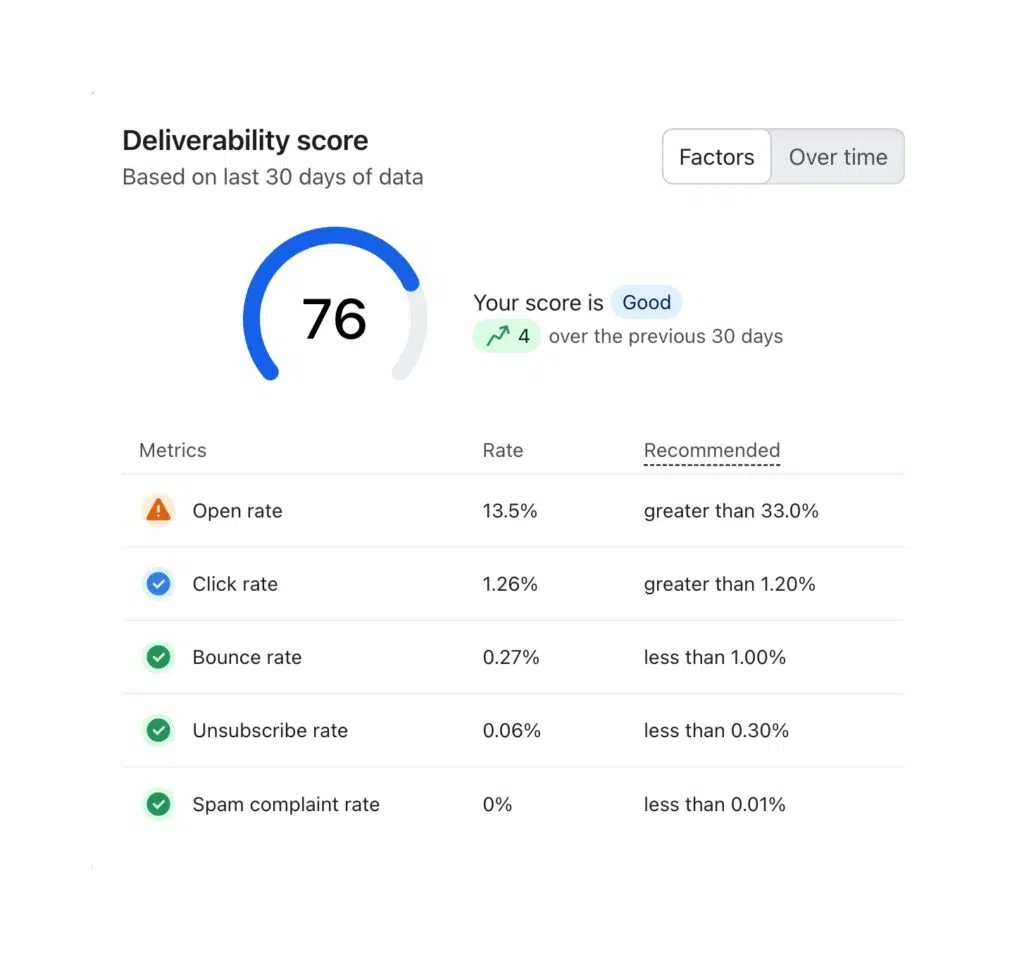
More importantly, the role of these channels changed. Email and SMS were no longer reactive tasks that required constant attention. They became structured systems that could be measured, adjusted, and improved with clarity. Reputation was no longer something being eroded with each send—it was something being maintained deliberately.
The business didn’t need to slow down its growth. It needed a system that could support it. Now it has one.


