

Most onboarding problems aren't training problems. They're knowledge problems.
When a business is small, the way work gets done lives in a few people's heads. The owner answers questions. A senior employee shows the new hire how things work. It holds together because everyone is close to the work.
Growth changes that. More hires, more locations, and more roles expose a gap that was always there: the business never had a documented, repeatable way of doing things. Nothing broke. Scale simply revealed what was missing.
That's the problem Trainual is designed to address.
What Trainual is
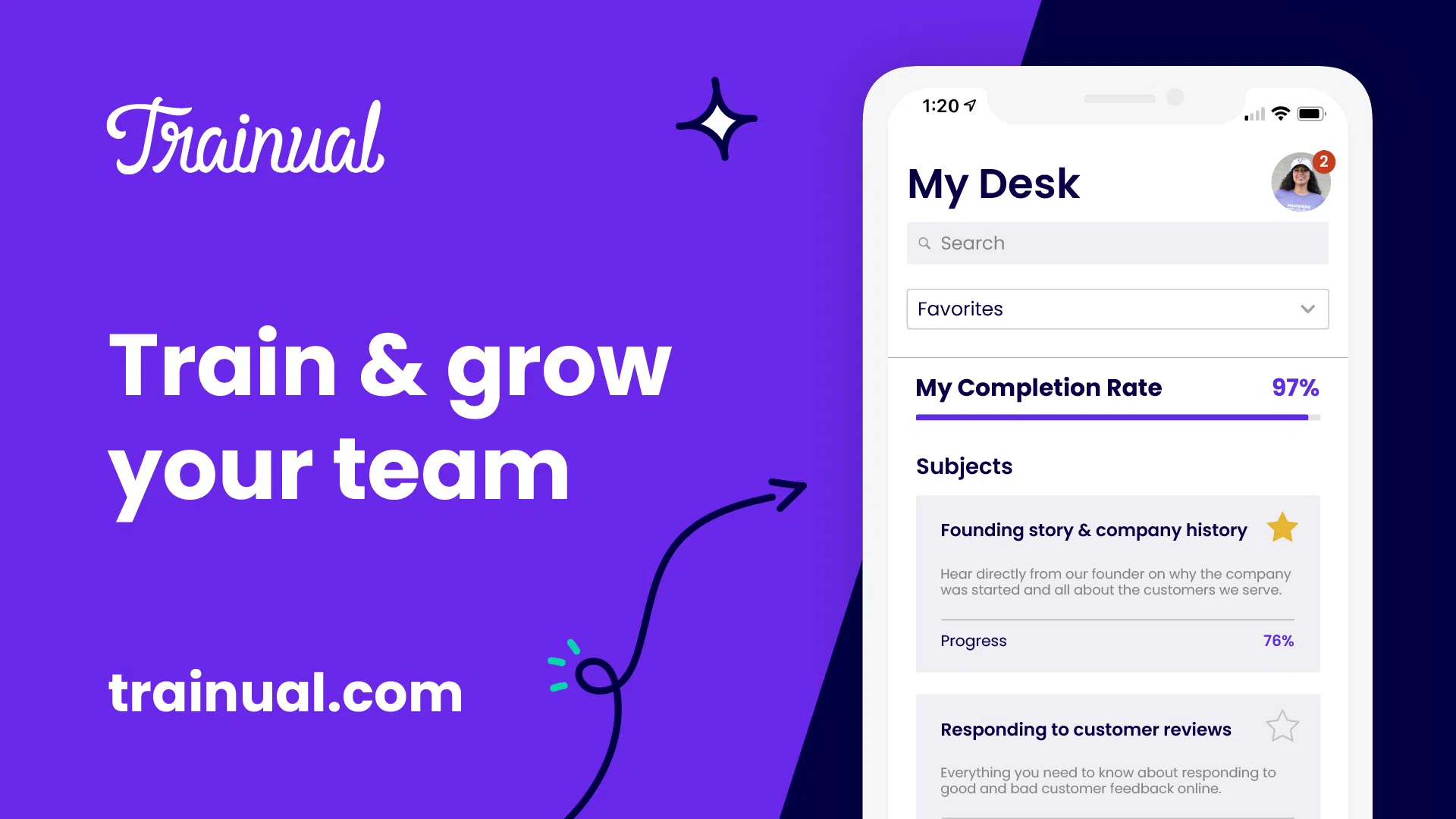
Trainual is a training and operations platform built for small and mid-sized businesses. At its core, it gives a company one organized, searchable place to document its processes, policies, and standard operating procedures, then turns that documentation into structured training for each role.
The platform has grown into three connected areas:
- Training — SOPs, role-based onboarding paths, tests, e-signatures, and completion tracking.
- Operations — meeting agendas, decision and action tracking, goals, and KPI scorecards.
- Performance — review cycles, feedback, and defined growth areas tied back to training.
An AI assistant sits across all three, answering questions based on the company's own documented knowledge and helping draft and update training content. A mobile app and Chrome extension put that knowledge in front of people where they work, and HR and payroll integrations keep people, roles, and assignments current automatically.
Who it's built for
Trainual is aimed at the owners, operations leaders, and managers of growing teams, typically businesses that have moved past the point where one person can personally train every new hire.
It's especially well suited to:
- Field and service teams such as HVAC, plumbing, home services, and construction
- Multi-location businesses and franchises that need every site to operate the same way
- Professional practices like medical and dental offices, law firms, and real estate teams
- Remote and distributed teams that can't rely on someone looking over a shoulder
The common thread isn't industry. It's a business where consistency now matters more than heroics.
What a system like this actually changes
Knowledge stops living in people's heads
When processes are documented in one place, institutional knowledge survives turnover, vacations, and role changes. The business no longer depends on whoever happens to remember how something is done.
Onboarding becomes structured instead of improvised
Role-based training paths give each new hire a clear sequence: what to learn, in what order, and what good looks like. Trainual's published customer stories describe this effect in practical terms. One franchise operator reports cutting onboarding time by 80%, and a home services company describes a seven-hour training process reduced to about 90 minutes.
Leaders see what's actually happening
Completion tracking, knowledge tests, and e-signatures show who has finished training and who understood it, not just who clicked through. That visibility replaces guesswork with clear next steps.
Change rolls out cleanly
When a policy or process changes, it can be updated once, reassigned to the right people, and confirmed. The team moves to the new way of working together instead of drifting between old and new versions.
Your best people get their time back
The experts who used to answer the same question five times a day can point to a documented answer and return to the work only they can do.
A tool supports the system. It doesn't replace it.
Trainual is a container. Its value depends entirely on the clarity of what goes into it.
Teams that get the most from a platform like this tend to do three things first: they define who owns what, they document the processes that matter most before trying to document everything, and they connect training to the rest of their systems, such as HR, CRM, and day-to-day workflows, so the information stays accurate without constant upkeep.
The goal isn't to remove responsibility from managers. It's to remove the friction that keeps them answering the same questions instead of leading.
Where to start
If your team relies on a handful of people to keep everything running, and every new hire adds to their load instead of lightening it, that's a signal your growth has outpaced your structure.
The next step is straightforward: get clear on how work actually moves through your business today, then decide where documentation and training fit. If that reflects where you are, you can book a discovery call and we'll map it out together.
